

Every healthcare facility depends on advanced medical equipment to diagnose diseases, monitor patients and provide life-saving treatment. From emergency rooms to operating theatres, hospitals rely on a wide range of medical equipment to ensure care and faster recovery. Whether it is a simple thermometer or a complex MRI scanner, every piece of equipment plays a key role in improving patient outcomes.
Understanding the medical tools list with uses is important to ensure the right procurement. For clinics, hospitals and healthcare facilities, choosing the right medical equipment is not about functionality – it is about patient safety, operational efficiency and long-term reliability.
Understanding medical equipment names and uses can help healthcare providers make informed purchasing decisions while improving the quality of care.
Medical Devices List- Important in Healthcare
Medical Equipment helps healthcare professionals diagnose illnesses, monitor health conditions, perform surgeries and provide emergency treatment. The best quality medical tool improves accuracy, ensures medical accuracy and enhances patient comfort.
Common Medical Instruments Used in Hospitals- Benefits
- Help in faster diagnosis and treatment
- Improved patient safety
- Better surgical precision
- Reduces hospital workload
- Increased patient monitoring
- Enhanced healthcare efficiency.
Investing in advanced and durable equipment ensures better healthcare services while reducing downtime and maintenance costs.
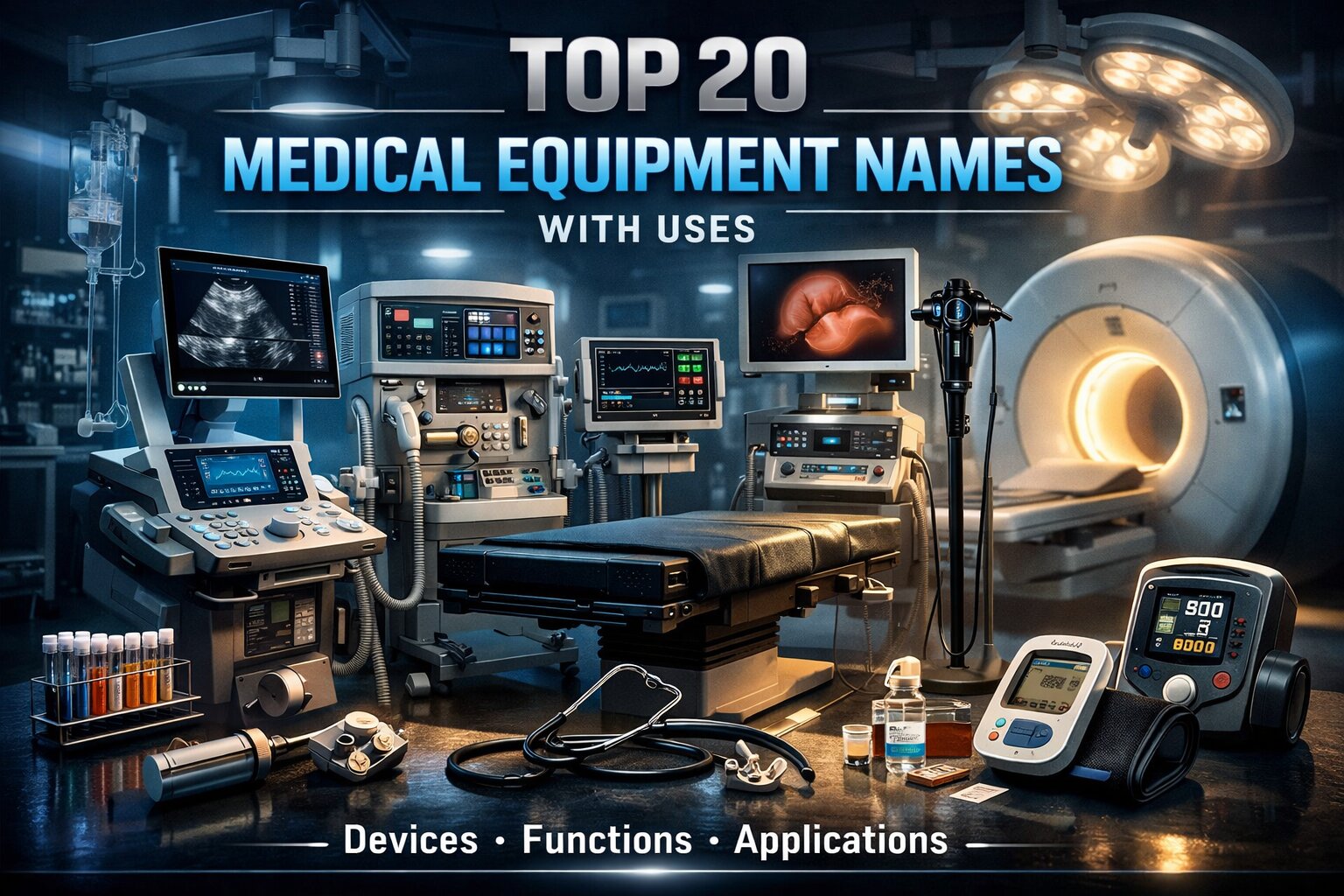
Hospital Equipment List with Uses
| Sr.No. | Medical Equipment | Uses |
| 1 | Ventilator | Helps Patients Breathe, used in ICUs and Emergency Care |
| 2 | ECG Machine | Records Heart’s Electrical Activity and Help Detect Heart Conditions |
| 3 | Defibrillator | Restores normal heartbreak during cardiac arrest using controlled electric shocks |
| 4 | Patient Monitor | Track vital signs such as heart rate, blood pressure, oxygen levels and temperature |
| 5 | MRI Scanner | Produces detailed images or organs, tissues and bones for accurate diagnosis |
| 6 | X-Ray Machine | Image of bones and internal organs and detect fractures or diseases |
| 7 | Ultrasound Machine | Uses sound waves to create images of internal organs and monitor pregnancy |
| 8 | Infusion Pump | Delivers fluids, nutrients or medication into patient’s body in controlled amounts |
| 9 | Surgical Lights | Bright and Focused Illumination during surgeries and medical procedures |
| 10 | Anesthesia Machine | Administers anesthesia gases and monitors patients during surgery |
| 11 | Syringe Pump | Delivers precise dose of medication to serious patients |
| 12 | Hospital Bed | Provides patient comfort, mobility and medical support during treatment |
| 13 | Autoclave Sterilizer | Sterilizes surgical tools and medical instruments using steam and pressure |
| 14 | Nebulizer | Respiratory Treatment- Converting liquid medicine into mist |
| 15 | Oxygen Concentrator | Supplies concentrated oxygen to patients with breathing difficulties |
| 16 | Suction Machine | Removes fluids, mucus or blood from patient’s airway or surgical area |
| 17 | Wheelchair | Help patients with mobility issues in healthcare facilities |
| 18 | CT Scanner | Creates detailed cross-sectional images of body for diagnosis |
| 19 | Dialysis Machine | Filters waste and excess fluids from body in kidney failure |
| 20 | Pulse Oximeter | Measures oxygen saturation levels in blood |
Medical Equipment Improves Patient Care
The basic medical equipment list given above enhances patient care and comfort while helping in detecting medical issues. The modern equipment allows doctors to make quicker diagnoses and provide more effective treatment plans.
Reliable medical equipment also improves hospital workflows and increases patient trust in the healthcare facilities.
What are the factors to consider when buying Medical Equipment?
Now that you have the medical instruments’ names, you need to choose the right and best quality devices aligned with your healthcare facility’s needs. It is important to procure the medical devices from an experienced and professional medical equipment supplier to ensure the best quality, as procuring poor quality devices can compromise patient safety and increase operational costs.
Here are some of the key factors to consider when buying the right medical equipment-
• Quality: It is important to choose equipment that meets the healthcare safety standards and certifications. Certified devices ensure compliance with medical norms and reliability.
• Long-Lasting: Hospitals use the equipment continuously, so durability is important. Medical devices procured from the professional supplier and exporter are long-lasting without any need for frequent repairs and replacements.
• Technical Support: The expert supplier provides reliable after-sales and technical support for maintenance and emergency repairs.
• Ease of Use: Check if the equipment is easy to operate. Your in-house medical staff can easily operate the equipment efficiently without complicated training.
• Cost v/s Value: Do not get carried away by low-cost equipment. They seem to be attractive initially, but poor performance and maintenance issues can increase long-term expenses.
Case Study
During the unprecedented health crisis, COVID-19, hospitals around the globe experienced an urgent demand for ventilators. Many healthcare facilities purchased low-cost ventilators from unverified suppliers to meet the emergency needs.
Many hospitals faced major issues such as inaccurate airflow control, technical failures and delayed servicing. A hospital in India invested in the best quality ventilator from a certified supplier with strong technical support. Although the initial cost is higher, the hospital experienced many long-term benefits, including-
• Minimal equipment downtime
• Faster technical servicing
• Accurate respiratory support for serious patients
• Better patient recovery outcomes
• Reduced maintenance costs
This showcases the importance of sourcing medical equipment from a trusted medical device supplier. The reliable medical equipment supplier not only provides certified products but also ensures warranty, availability of spare parts, staff training and continuous support. In the healthcare facility, quality directly impacts patient lives, making supplier selection a key decision.
How to maintain Medical Equipment?
• Follow the Regular Maintenance Schedule
• Train healthcare staff
• Use Genuine Spare Parts
• Maintain Sterilization Standards
• Keep Service Records
Medical Equipment is the pillar of every hospital, clinic, and nursing facility. From diagnosis to emergency treatment, these devices help medical professionals save lives and improve patient outcomes.
Investing in the best quality hospital equipment increases patient safety, operational efficiency and healthcare reliability.
Choose the trusted medical equipment supplier who provides certified products, expert support and premium devices for your hospitals. Improve patient care, reduce operational risks and strengthen your hospital’s image for years to come.
FAQs
- What is the common hospital equipment names list?
Common hospital equipment names include ventilators, ECG machines, MRI scanners, X-ray machines, infusion pumps, hospital beds, surgical lights and more. United Poly offers the best quality hospital devices aligned with your healthcare facility’s needs. - Certified Medical Equipment – Why is it important?
Certified equipment meets healthcare safety norms, ensuring accuracy, reliability and patient safety while reducing risk of operational failures. - How often should hospital equipment be maintained?
United Poly offers routine maintenance and calibration to ensure proper functioning and compliance with healthcare regulations.
About the Author
United Poly is an established and reputable Indian manufacturer and exporter of the best quality hospital furniture, medical hardware, and sterilization equipment. With more than 4 decades of experience, the brand has built a global image across many countries.
With commitment to quality control and design, the brand manufactures precision-engineered hospital equipment. With ISO 9001:2015, ISO 13485: 2016, FDA and CE certifications, United Poly serves as an OEM for multiple organizations in the US and Europe.